Stacks
// UI/UX | USER RESEARCH
Stacks aims to provide collegiate libraries with a digestible, organized, and trustworthy interface that encourages students to use campus libraries for their personal pursuits and learnings.

// OVERVIEW
Allure of the Libraries
This project was for our first interface design course, taught by an industry professional with decades of experience in this field. For this assignment we were tasked to create a new application grounded on user and market needs.
Built from an existing need in our university, Stacks is the one-stop hub for students to access their library resources.
Duration
6 Weeks
Winter 25
Team
L. Day [IxD]
M. Baulch [IxD]
M. Brooks [IxD]
S. Copeland[IxD]
Tools
Figma
UX Strategy
Prototyping
User Research
Deliverables
App Prototype
Presentation
Advised By
Bill Flora

// THE PROBLEM
The Hidden Resources of the Libraries
Despite the various resources university libraries offer, many students have difficulty finding this information, or are not aware of them at all.
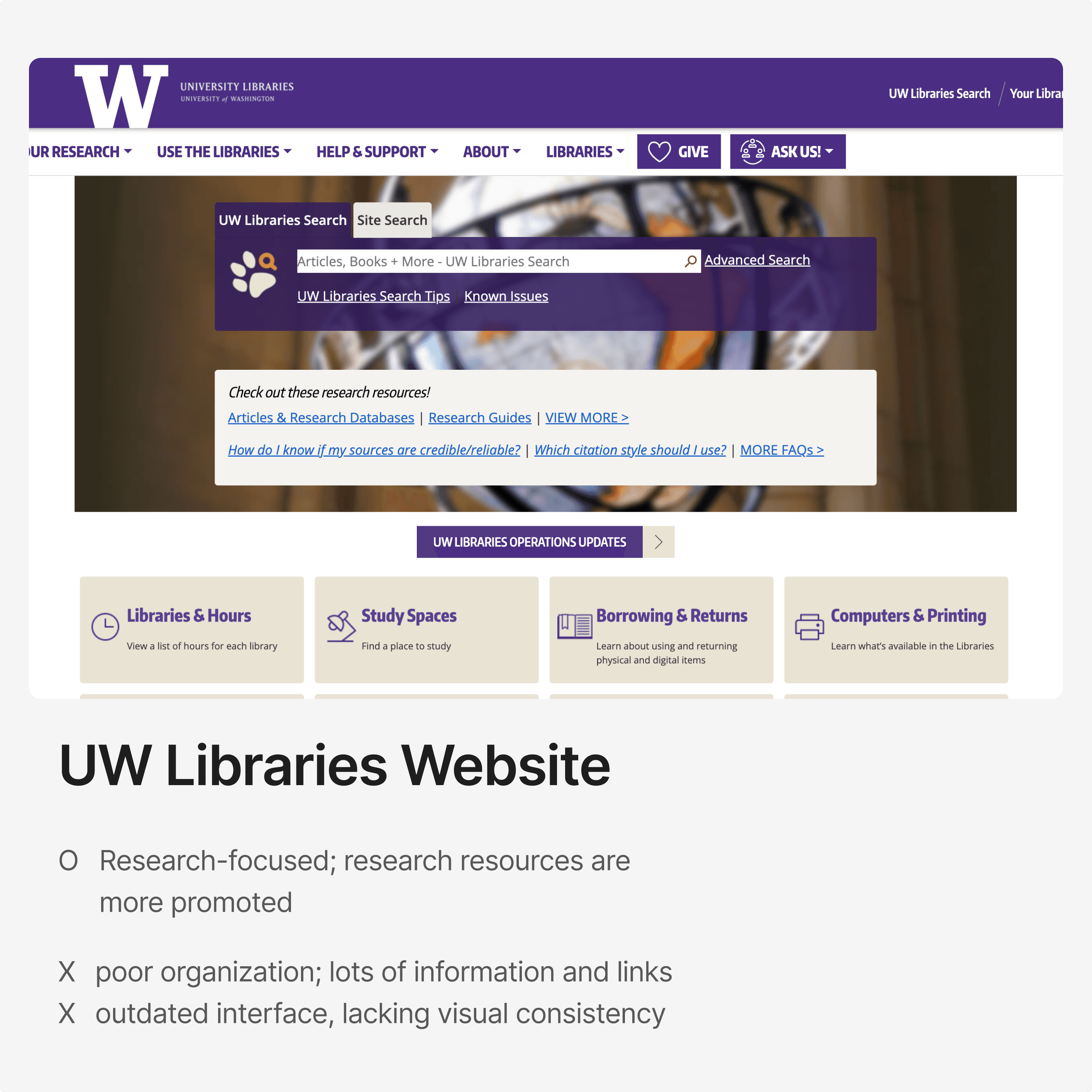
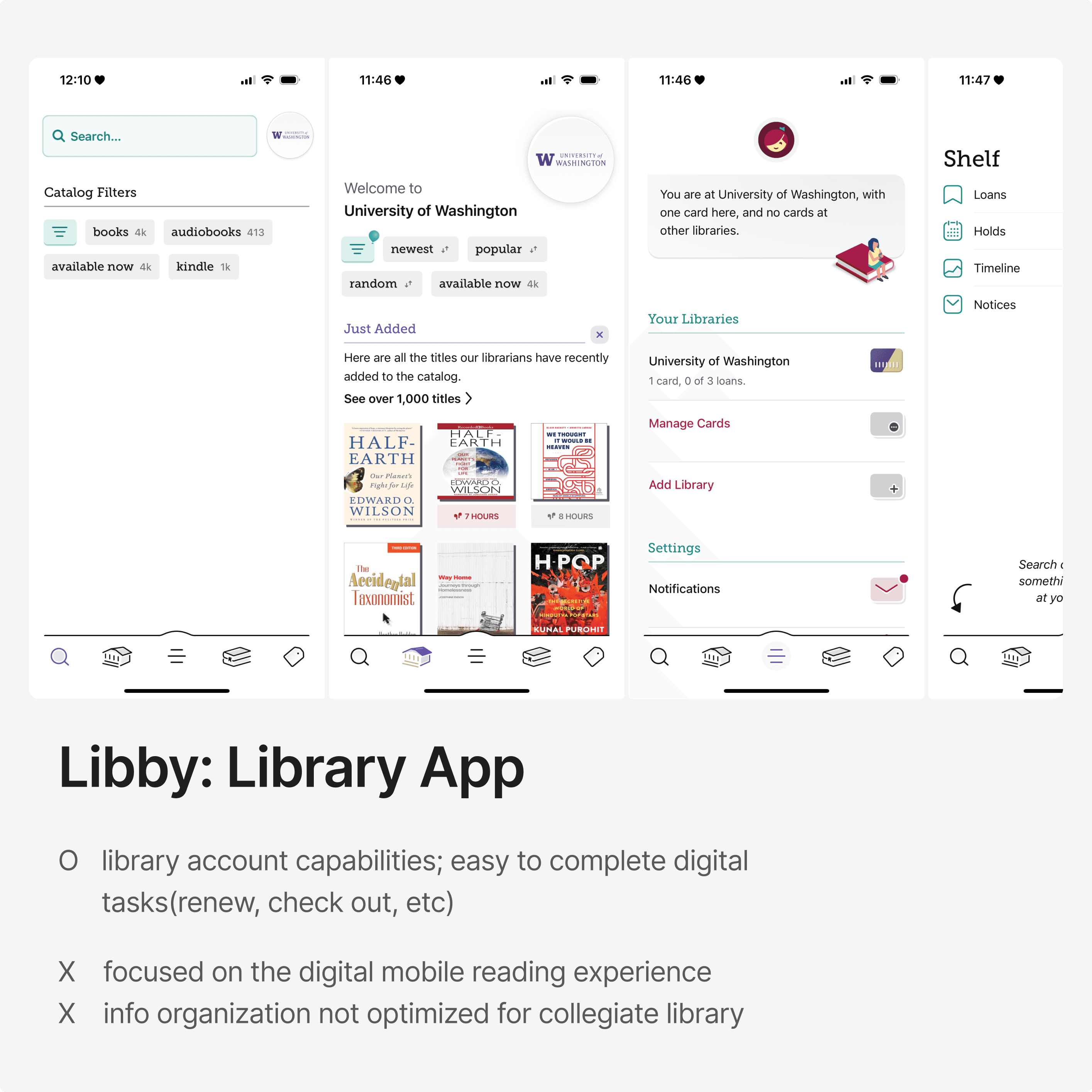
The University of Washington's current website difficult to navigate and discover resources due to its poor organization and outdated interface. Applications such as Libby do well with the digital catalog and account experience, however does not account for the full resources collegiate libraries offer.
// USER INSIGHTS
Lack of Discoverability
With this initial insight in mind, we conducted 6 interviews with university library staff, as well as current students to better get to know existing library habits.
01:
Convenience over credbility
The amount of time and effort it seems to take for students to find the resource they need often deters them when quick databases and AI exists. Even if they prefer physical items, the convenience of digital is enough to prevent them from trying.
02:
Resources are unknown
The library has resources to help whether it's topic expert librarians, workshops, or departments, however gaining exposure to these resources is where the difficulty lies. Many students reported that they barely know of any resources at all.
// UX STRATEGY
Building Opportunity
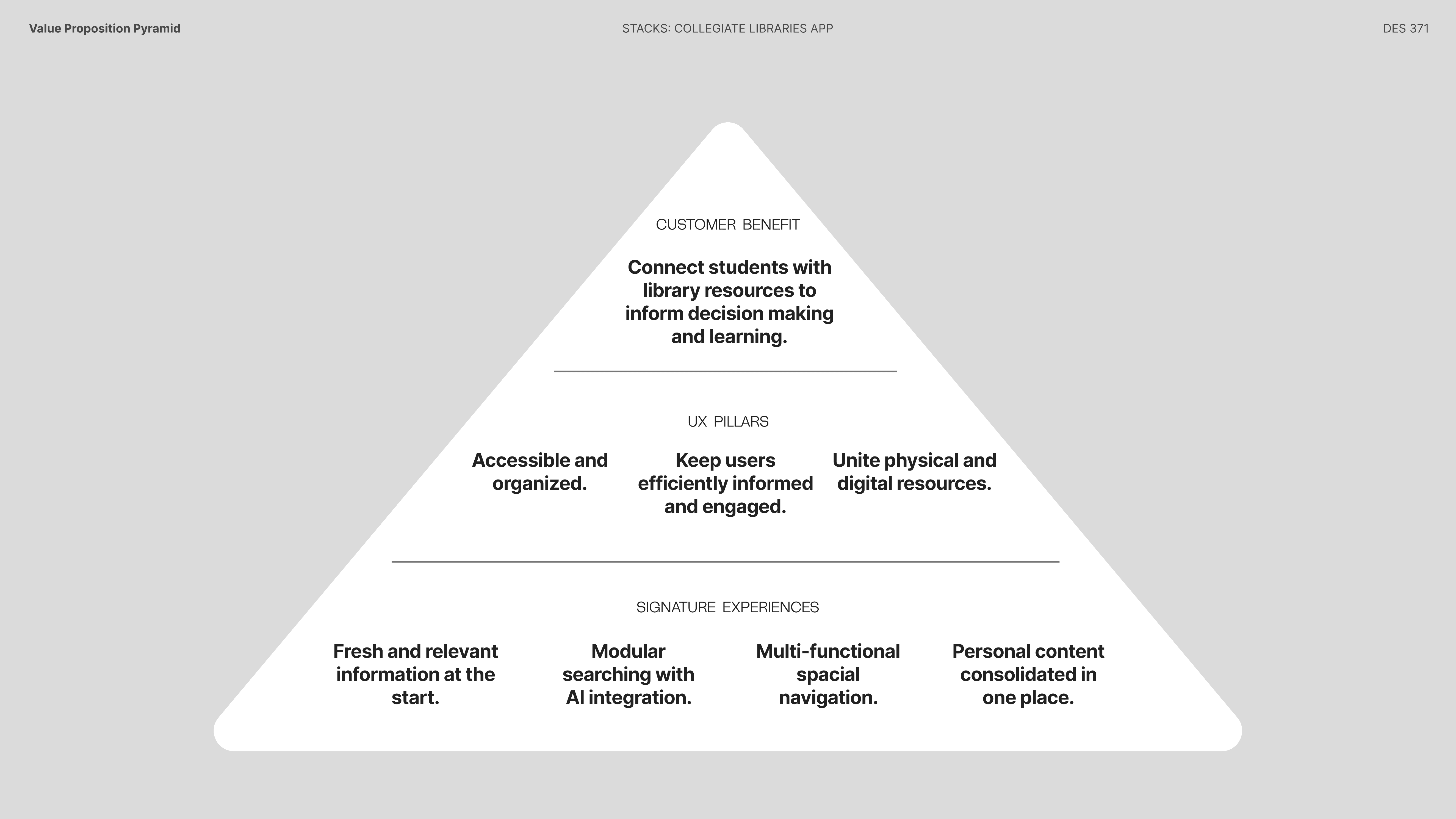
From our insights, we constructed a value proposition pyramid to guide our design decisions.
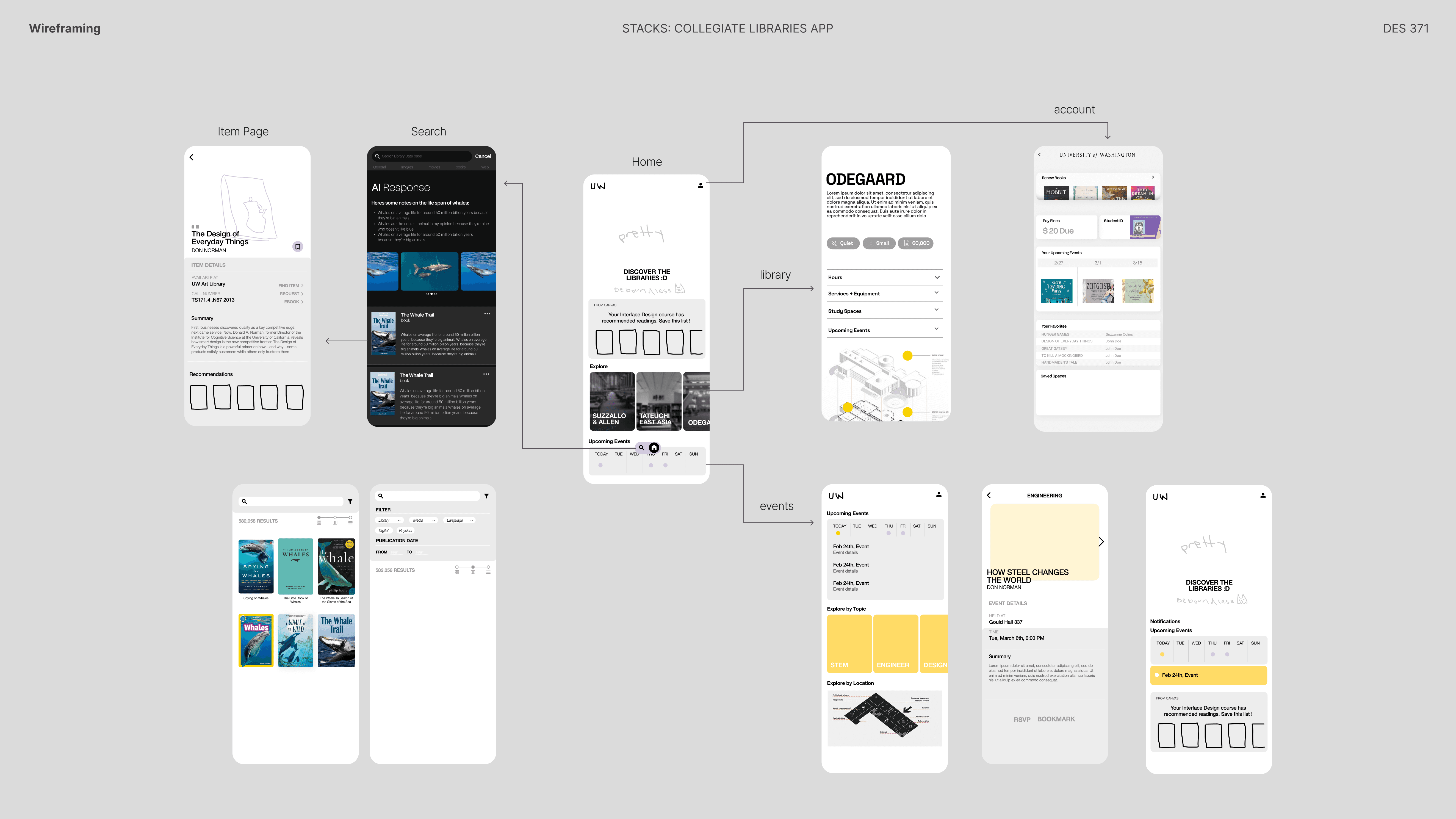
I led the construction of the information architecture, focusing on categorizing different pages to streamline the navigation of the app in response to the current lack of discoverability.

Due to the large scope of resources the library had to showcase with the limited time we had, we each ended up focusing on certain pages delegated through the information architecture. I worked on the search pages, as well as the initial homepage design.
// VISUAL DIRECTION
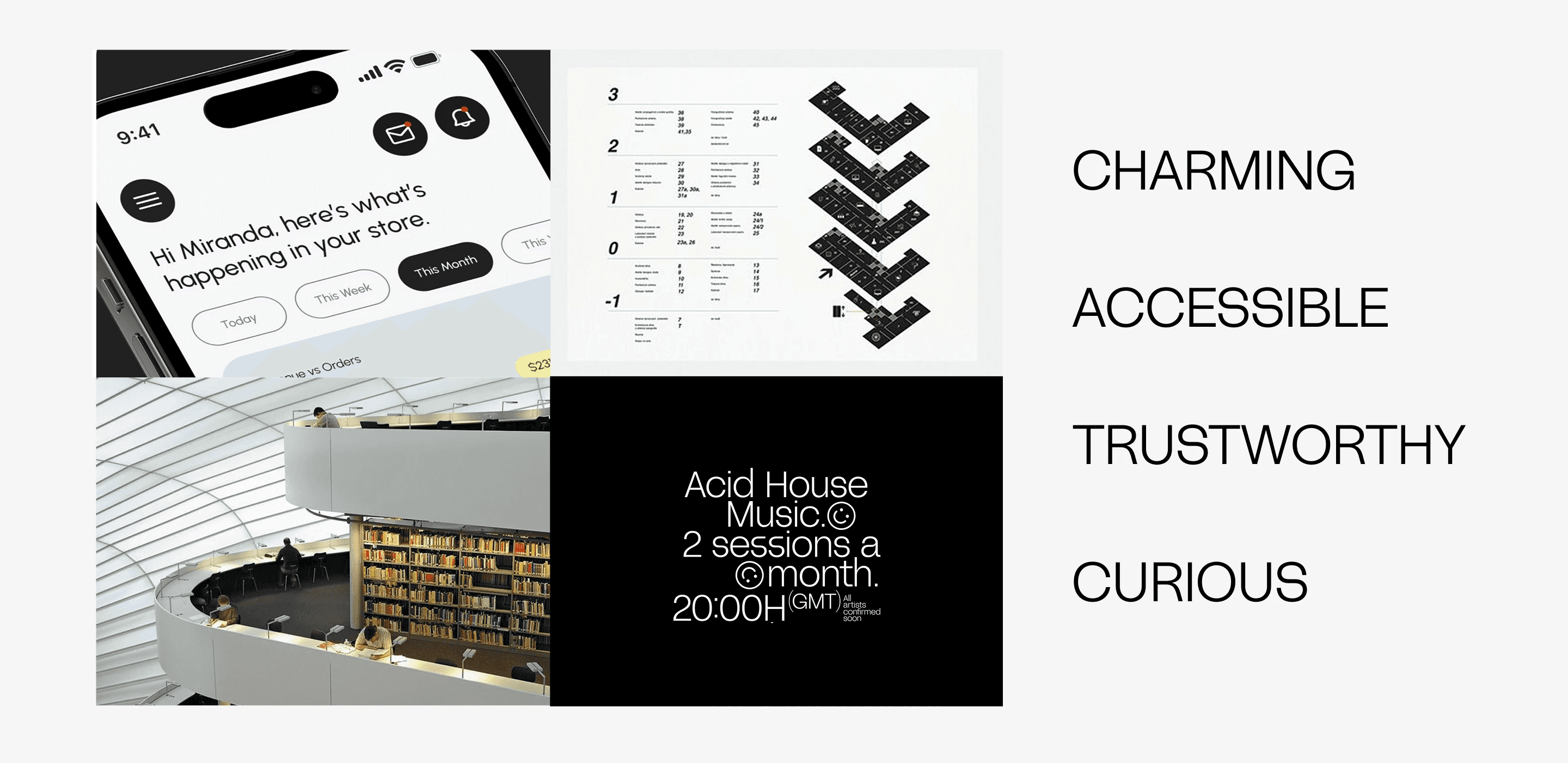
Conveying the Library Atmosphere
We found that the physical space and atmosphere of the libraries is also a factor that draws students. With this in mind, our visual direction aimed to highlight both the physical library, as well as the beauty of book covers.
//REFLECTION
Stacks
Next Steps:
In this project, we focused on understanding and building a strong foundation of user needs. Because of the scope of features a library app encompasses with our given project timeline, we weren't able to focus as much on all use cases and screens. I would love to take the time to further iterate on the pages and interactions to improve the overall experience for users.
Takeaways:
With experience as a library worker, I was very excited to be able to incorporate my knowledge from the libraries to a design project. As we consolidated insights, it was challenging at times to be the library "expert" and effectively convey the nuance of what users truly experience and not what we shape it to be as designers.
Working on this project reiterated the importance of the responsibility we have to empathize and understand the user base to better craft an intentional and impactful experience.
