Back
Overview
Florish
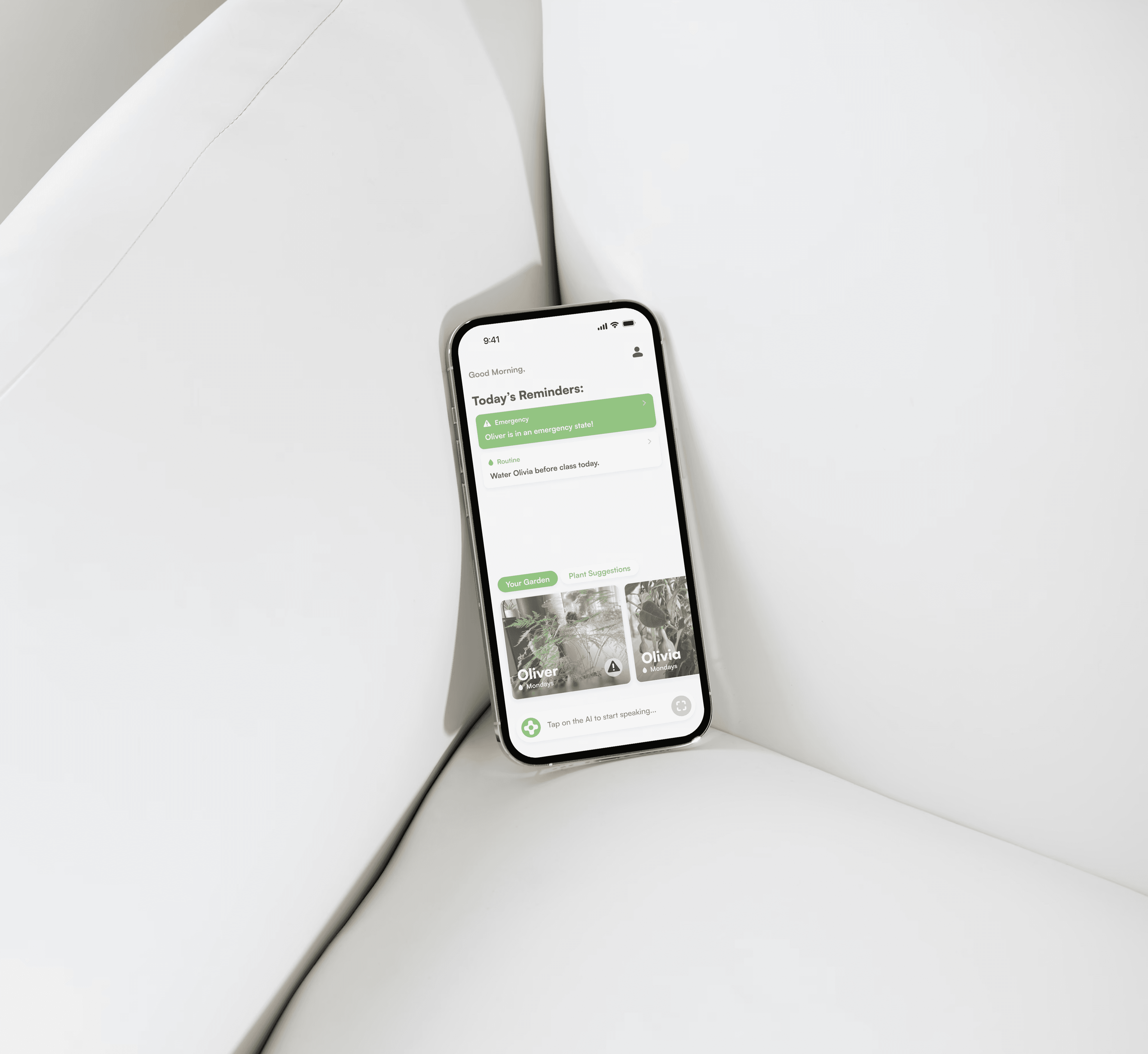
Florish is your AI Plant care assistant in an app, aiming to help users care for all your plants in a sustainable, personalized way that grows with you.
Overview
A Multimodal Interface
This project was for an Interface design course taught by two industry-leading professionals who specialized in innovative AI technology and prototyping. The prompt for this project was to design a multimodal AI interface for a specific domain.
Caring for plants can be a fulfilling hobby, offering a sense of responsibility and visible rewards. However, successful plant care requires a unique and holistic understanding of both you and your plant, which can be challenging when time, knowledge or resources are limited.
Duration
6 Weeks
Spring 25
Team
E. Nalla [IxD]
L. Kwok [IxD]
Advised By
Kay Hoffmeester
Paul Hoover
Tools
Figma
Prototpie
After Effects
Prototyping
Deliverables
App Prototype
Presentation
After onboarding, room scan uses the phone’s built-in sensors to analyze the room and the light it will receive. This feature gives users a personalized recommendation for plant placement that fits your unique space.
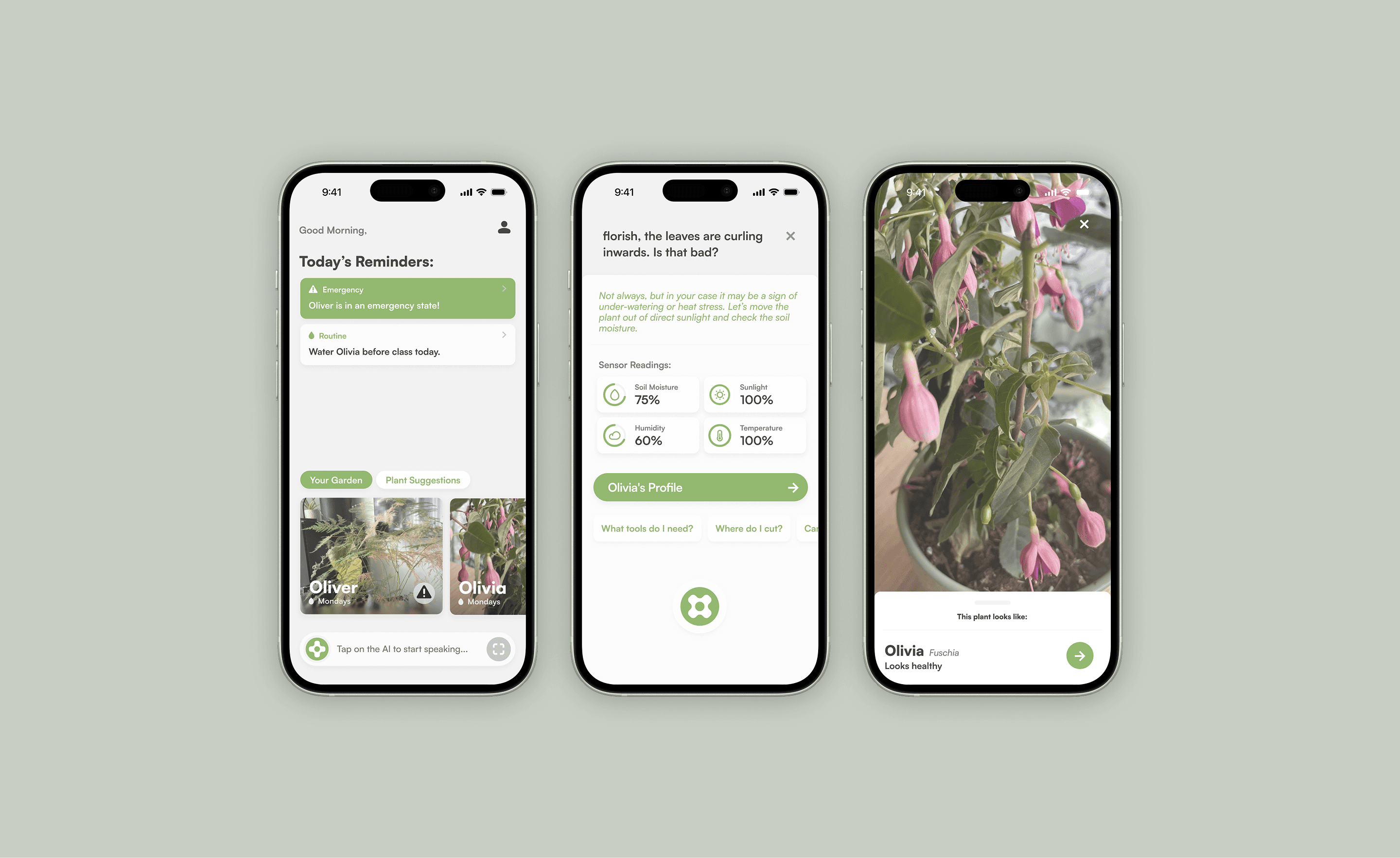
The camera can be used to identify your plant and analyze visual indicators of plant health. Additional plants can be added at any time, allowing the system to grow with the collection and adapt care recommendations accordingly.
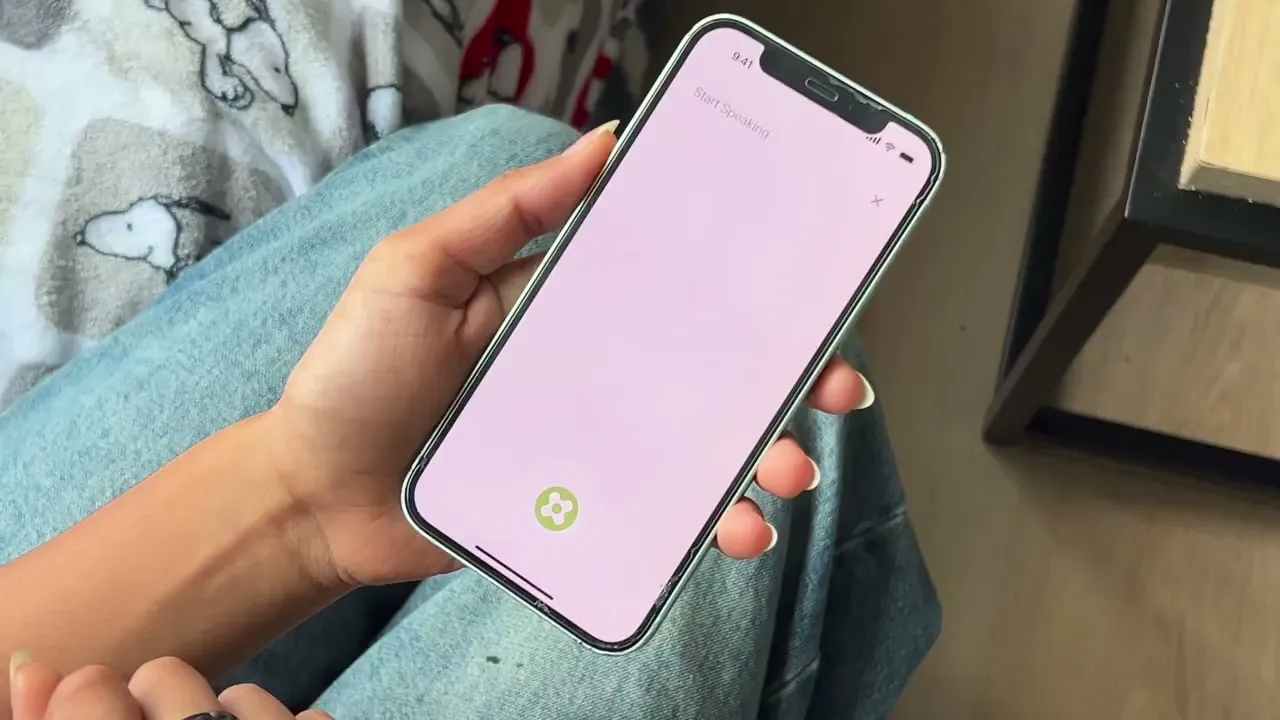
An AI assistant can be accessed at any point to help guide and support you. Whether it’s a simple care question, a request for specific advice, or an experimental idea, Florish meets you where you are.
Using the camera scan, sensor data, and complete care history, Florish provides a diagnosis along with step-by-step instructions, as well as clear next steps and periodic check-ins.
The Problem
Dying House Plants
Plant care can be a fulfilling hobby, offering a sense of responsibility and visible rewards. However, no matter where you place it or how much you water it, nothing you do seems to revive your plant.
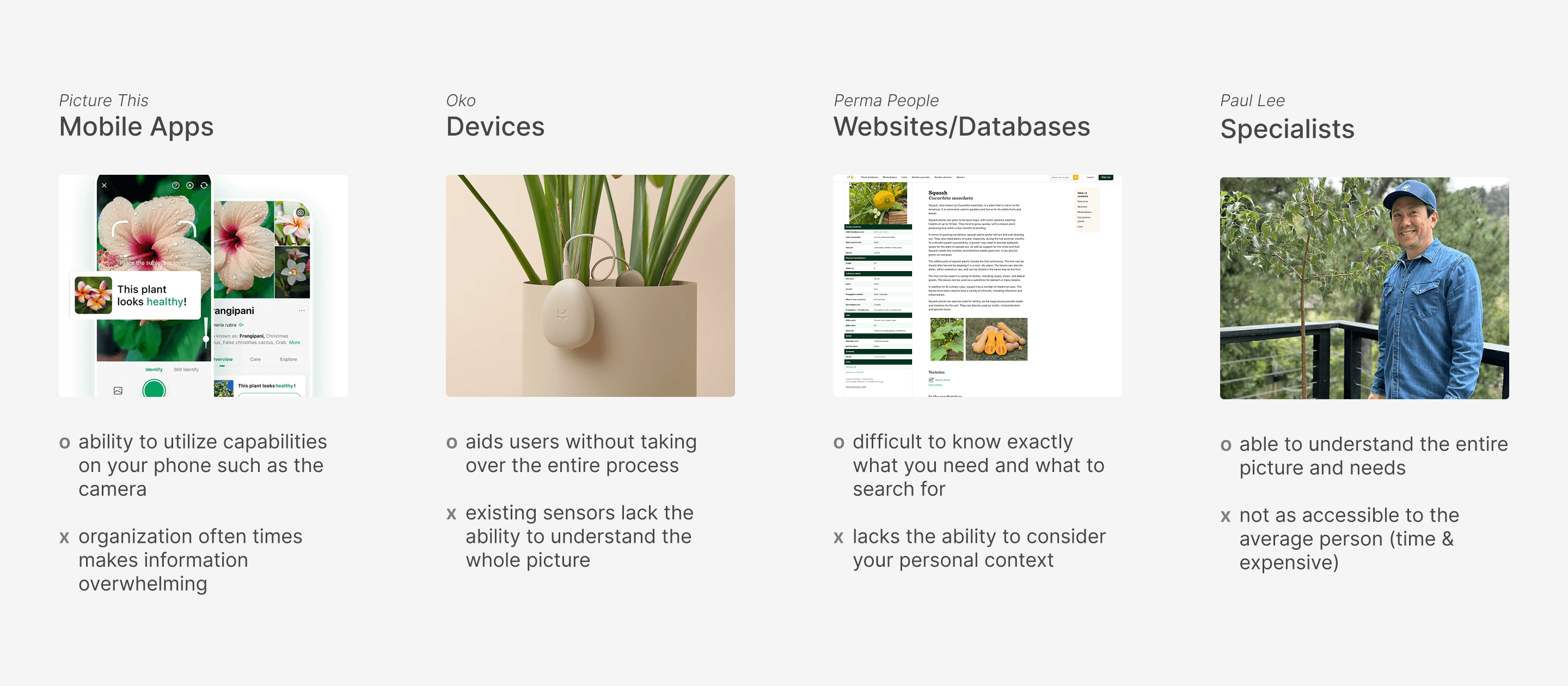
Current plant care resources lack the ability to comprehend the context in which the house plants live, leading to incomplete information. However as resources get more accurate, they also become more inaccessible.
User Interviews
Pain Point: Uncertainty
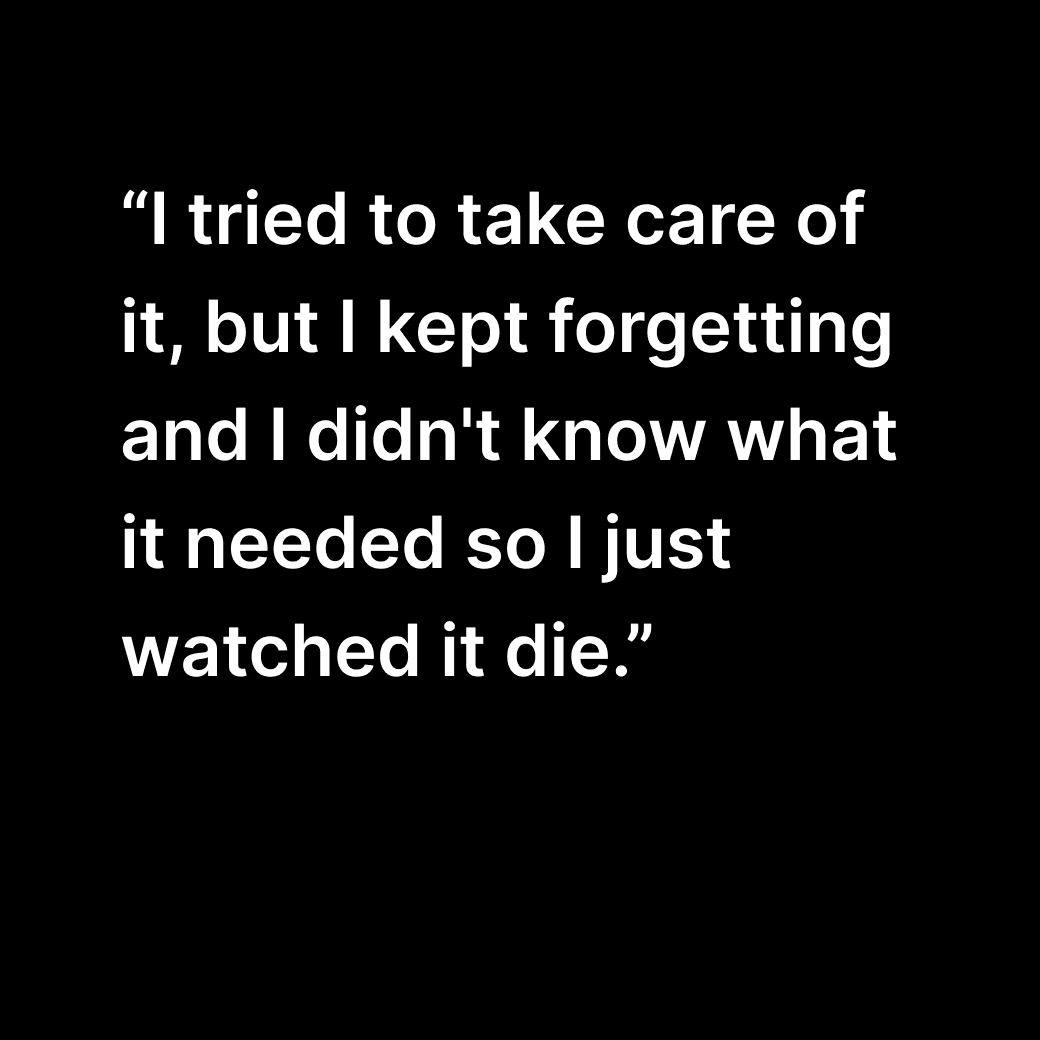
Participants reported difficulties most often with the uncertainty of not knowing what exactly their plants need, leading to frustration, and ultimately neglect, when maintenance efforts fail to work.


How might we create a plant care experience that meets users where they are—accounting for their space, routines, and goals—to help them confidently care for their plants?
Exploration
Concept Ideation
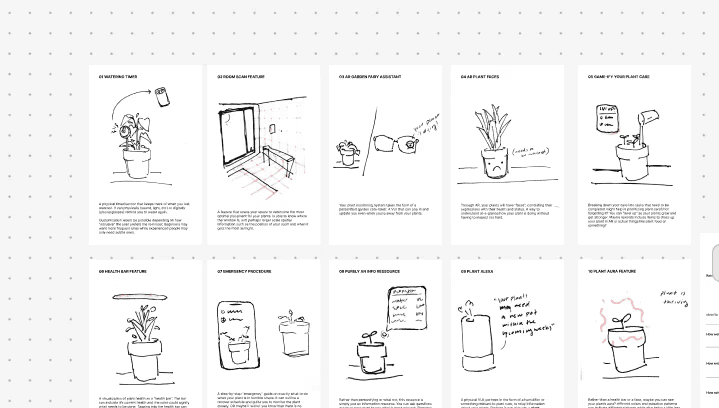
The main point of divergence in our explorations was whether the experience should live within a mobile app or as a fully immersive AR glasses interface.
We ultimately decided to pursue a mobile format as it would offer a more accessible solution for our users, which would allow us to focus on delivering an intentional experience within current technological constraints.

User Flows
Mapping Out Scenarios
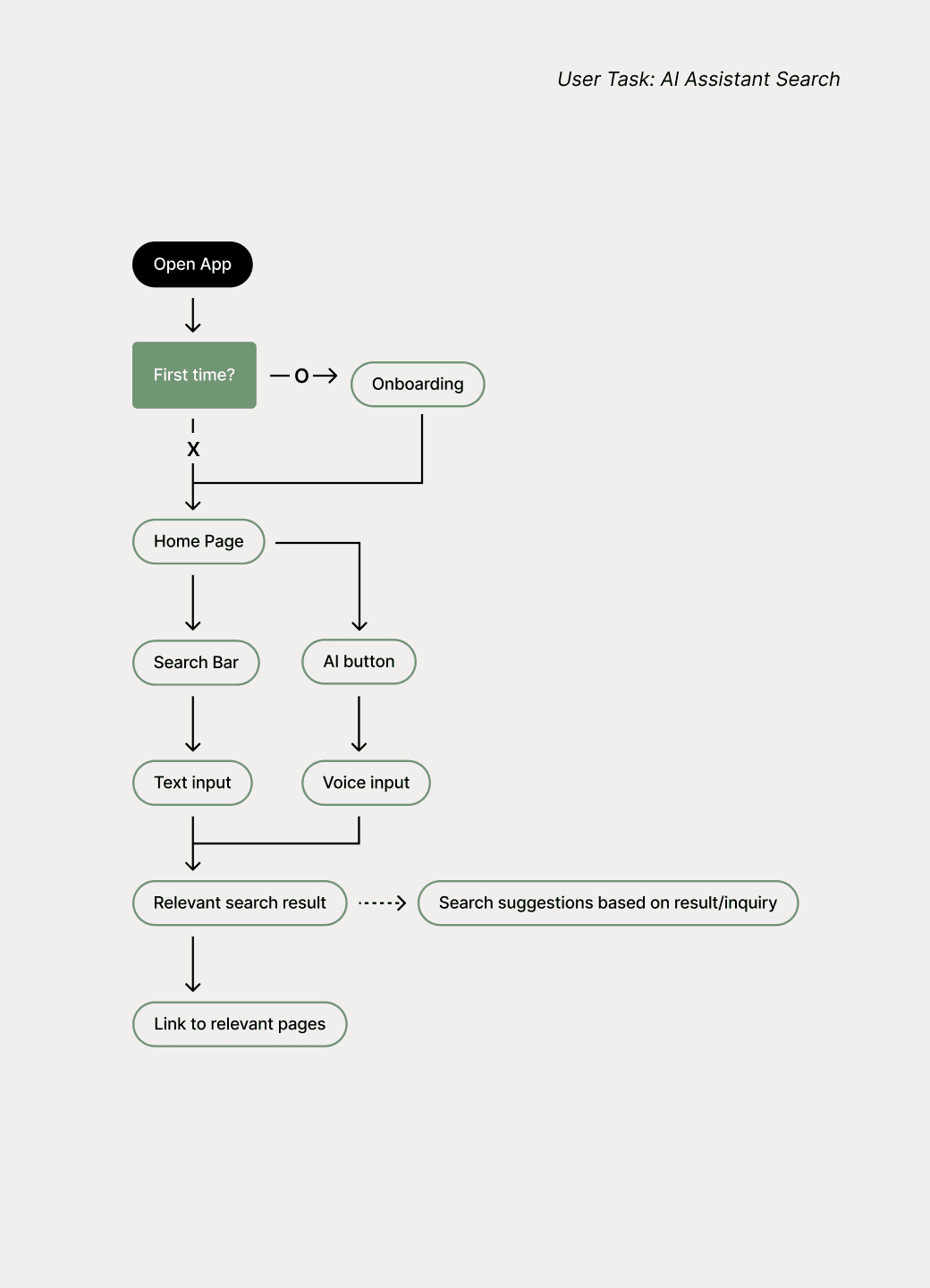
I led the creation of the user flows, focusing on having a streamlined flow for each feature we explored for the information phases. This was the first time I worked on crafting an AI interface so it was challenging to consider the points in which its use case would help to simplify the flow.



Visual Direction
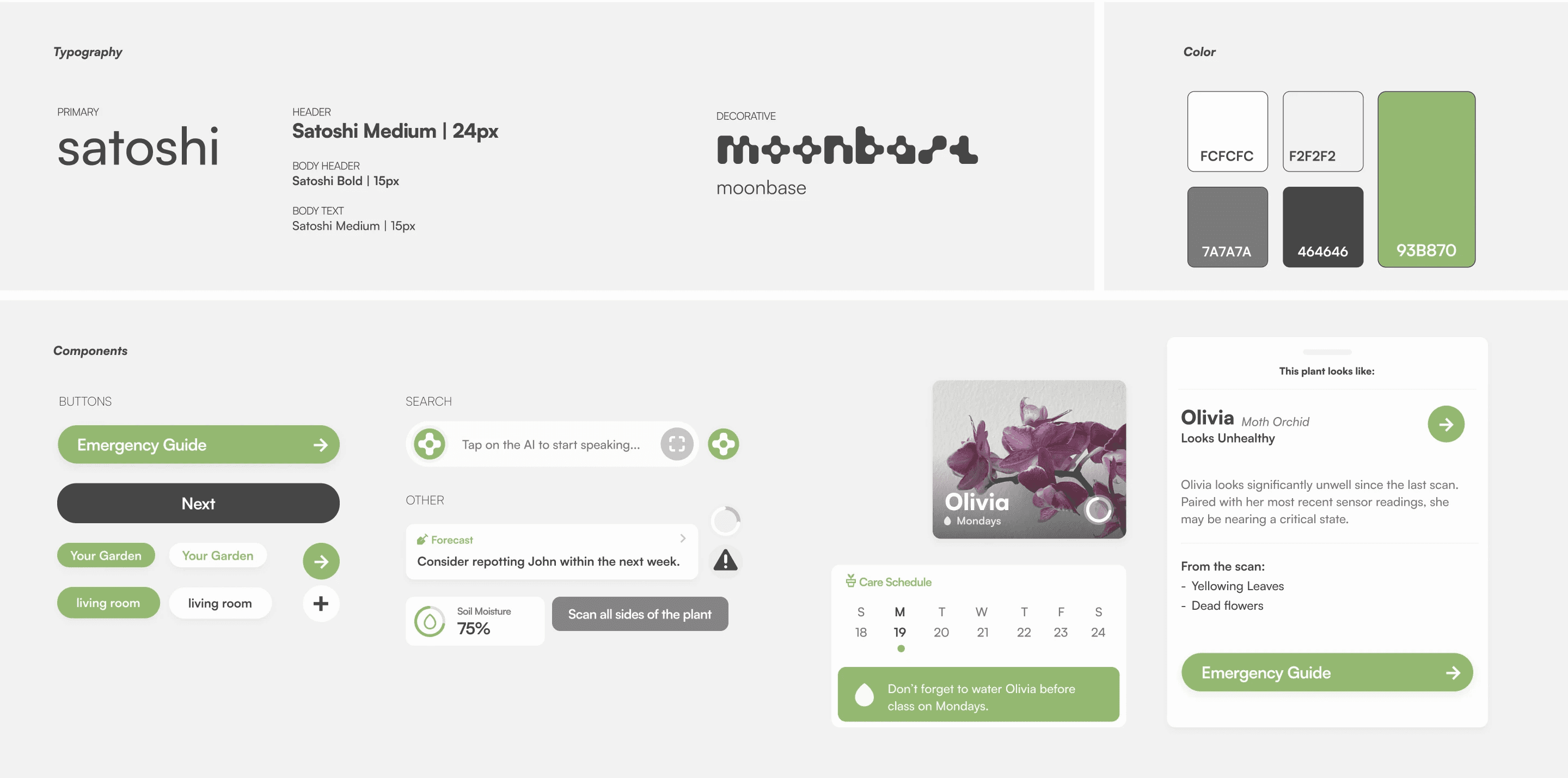
Creating a Design System
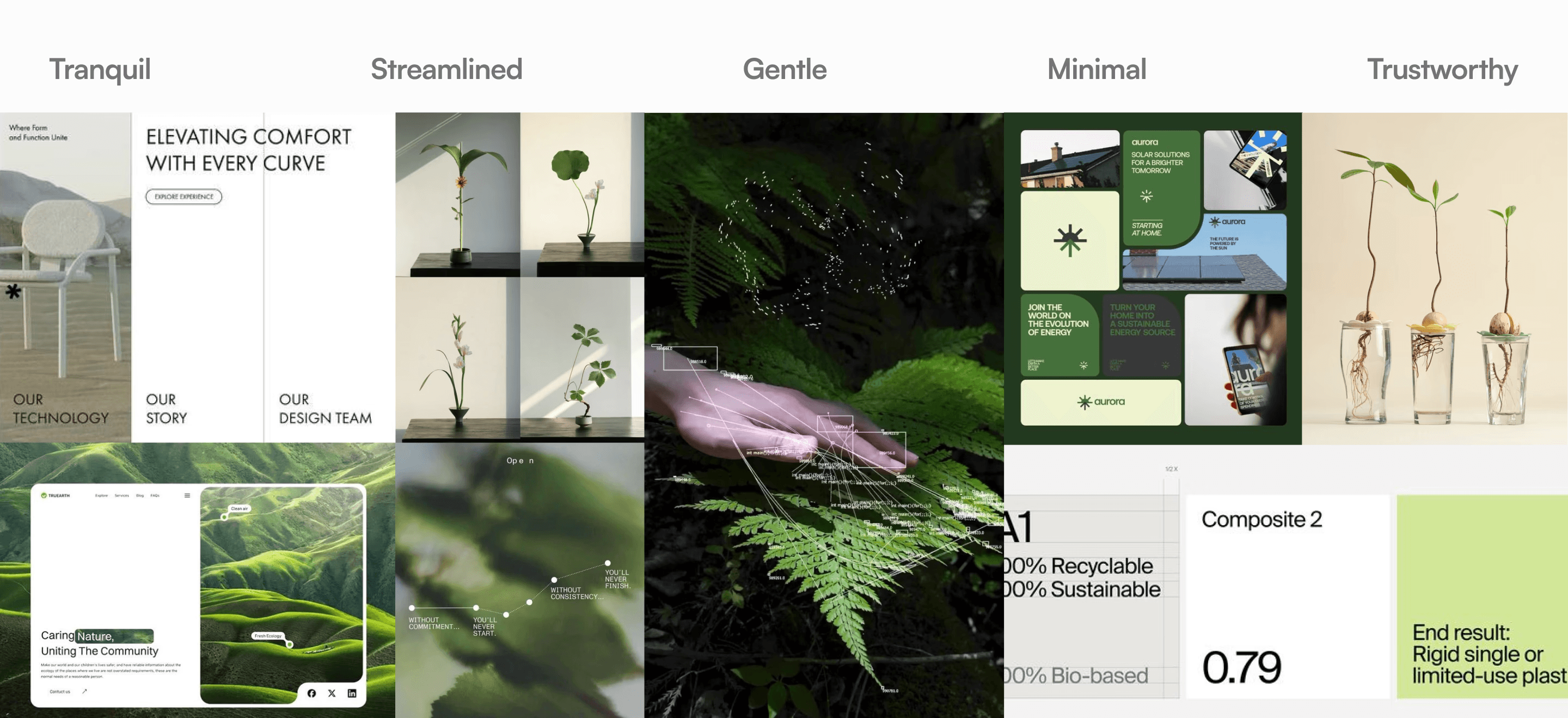
We aimed to create an interface that felt calming and unobtrusive with the natural beauty of plants themselves.
With the Addition of AI, we iterated on balancing user-inputted imagery with the interface elements.
Reflection
Florish
Next Steps:
While we prioritized accessibility, realistic implementation, and ease of use through a mobile format, we see potential for extending Florish into a more immersive AR experience. We had originally considered building Florish as an AR-based application, and that early vision led to valuable conversations around context of use and accessibility. With more time, we could explore adapting the app for Vision Pro to take fuller advantage of spatial context and interaction.
Takeaways:
This project taught me a lot about the importance of communication. Unfortunately there were communication issues not only within my team, but within the course and project guidelines itself. While frustrating, it truly reiterated the importance of good collaboration and teamwork that I definitely will carry with me in future projects.